3PL Pricing: What It Actually Costs to Outsource Fulfillment
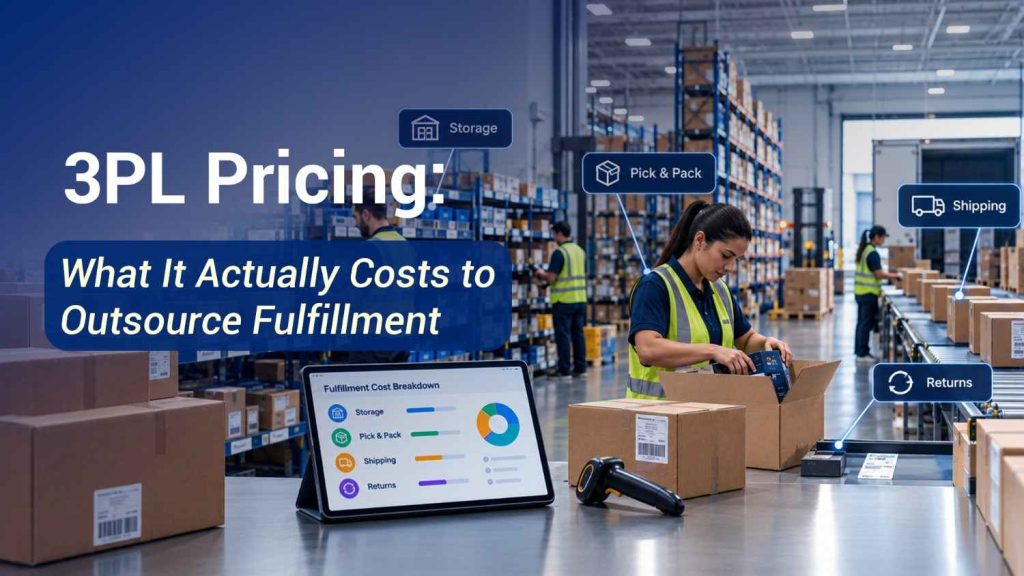
Ask five different 3PLs for a quote and you’ll likely get five different answers, five different formats, and at least one invoice that doesn’t match what was originally pitched. That’s not because pricing is a mystery. It’s because most fulfillment quotes bundle several moving pieces together without explaining what’s driving the total, which makes it hard to know if a number is fair or padded.
This breaks down what actually shapes 3PL pricing, where the real costs sit, and which fees tend to sneak up on brands after they’ve already signed.
What Goes Into a 3PL Quote
A typical 3PL fulfillment pricing structure is built from four core components, and understanding each one is the difference between comparing apples to apples and getting blindsided later.
Storage. Charged by square foot, pallet, or bin, depending on the provider and your inventory footprint. Bulkier, slower-moving SKUs cost more to store than compact, fast-turning ones.
Receiving. The fee for unloading, inspecting, and putting away inbound inventory. Often charged per pallet or per hour, and easy to overlook when comparing quotes.
Pick and pack. The cost of the pick and pack fulfillment services themselves, pulling items from inventory and preparing them for shipment. Usually priced per order, with add-ons for multi-item orders, kitting, or custom packaging.
Shipping. Carrier rates plus any markup the 3PL applies. This is frequently where the real margin lives, so it’s worth asking directly whether rates are passed through at cost or marked up.
Typical Per-Order and Per-Square-Foot Pricing Ranges
Industry data on 3PL pricing in markets like New York generally puts warehouse storage somewhere between $0.50 and $2.00 per square foot, and pick and pack fees in the $2 to $5 per order range, before shipping (source: Fulfill.com). Actual numbers swing based on order complexity, SKU count, and how much automation a provider has invested in.
(Note: these are general industry ranges for context. Swap in Fulfillment Plus’s actual rate card here before publishing, since specific numbers are what make this kind of post convert.)
Brands with straightforward, single-SKU orders sit at the low end of these ranges. Multi-item bundles, subscription boxes and kitted programs, or products requiring extra documentation, like supplement and nutraceutical fulfillment, tend to push costs higher because of the added handling time.
Hidden Fees to Watch For
The base rate rarely tells the whole story. A few line items worth asking about before signing anything:
- Accessorial charges. Fees for anything outside standard pick and pack, like special labeling, gift notes, or fragile-item handling.
- Dimensional weight adjustments. Carriers bill by whichever is greater, actual weight or package volume. A 3PL that doesn’t optimize packaging can quietly inflate your shipping spend.
- Minimum order or storage commitments. Some providers require a monthly minimum regardless of actual volume, which stings during slow seasons.
- Onboarding and integration fees. One-time setup charges that don’t show up in the per-order rate but affect your first invoice.
- Returns processing. Reverse logistics is often priced separately, and skipped entirely in some quotes until a brand’s return volume forces the conversation.
None of these fees are inherently unfair. The problem is when they’re left off the initial quote and only surface once you’re locked into a contract.
Why Transparent Pricing Matters More Than the Lowest Number
The cheapest quote on paper isn’t always the cheapest partner in practice. A 3PL that lays out storage, pick and pack, shipping, and accessorials clearly upfront, and sticks to that structure on the invoice, tends to save brands more over a year than one with a low headline rate and a long list of add-ons.
At Fulfillment Plus, pricing conversations start with your actual order profile, SKU mix, and volume, not a generic rate card. That’s the only way to give a number that still holds up three months into the relationship.
Get a Custom Quote
Warehousing and fulfillment costs vary enough by brand that a real quote is more useful than any published range. Contact Fulfillment Plus for a breakdown based on your actual order volume, SKU count, and shipping zones.
Frequently Asked Questions
How much does 3PL pricing typically cost per order? Pick and pack fees generally run $2 to $5 per order, depending on order complexity and whether the provider offers automation. Storage, shipping, and any accessorial fees are billed separately.
What’s the difference between 3PL pricing and doing fulfillment in-house? In-house fulfillment carries fixed costs, rent, staffing, and equipment, regardless of order volume. 3PL pricing scales with actual activity, which usually makes it more cost-effective for growing or seasonal brands.
Why do 3PL quotes vary so much between providers? Quotes differ based on what’s bundled into the base rate versus billed as an accessorial, how shipping is marked up, and whether minimums or setup fees apply. Comparing the full fee structure, not just the headline number, is the only reliable way to compare providers.
Are there hidden fees in most 3PL contracts? Often, yes. Dimensional weight adjustments, returns processing, and onboarding fees are the most commonly missed line items. Asking for a full fee schedule before signing avoids surprises later.