What CFR 111 Compliance Means for Your Supplement Brand’s 3PL Partner
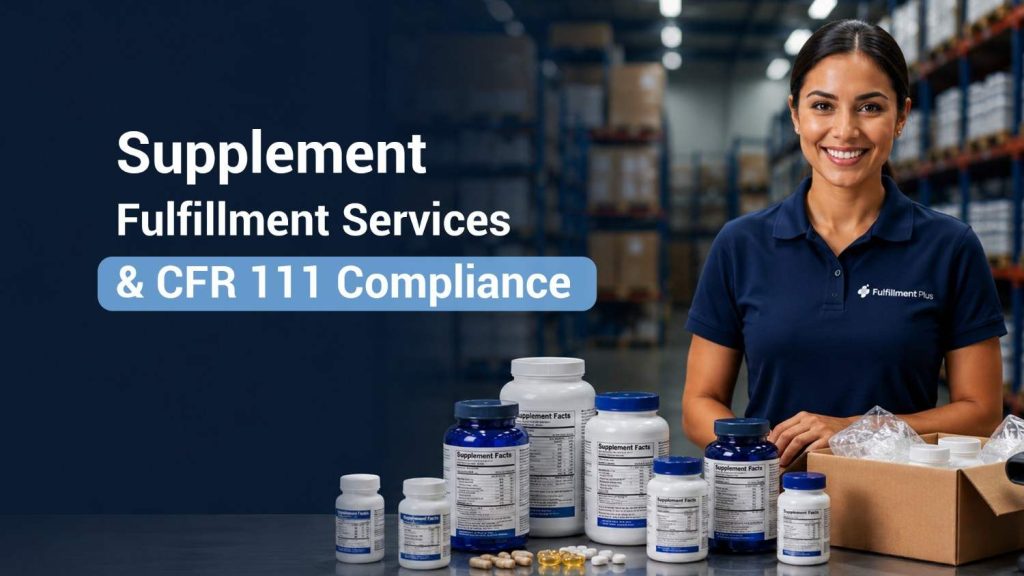
Selling dietary supplements is not the same business as selling t-shirts, and the warehouse behind your brand needs to know the difference. A missed lot number, an untracked expiration date, or a careless storage environment does not just cost you a customer. It can trigger an audit, a recall, or a headline you never wanted. That is exactly why supplement fulfillment services built for regulated products, not repurposed from a generic 3PL playbook, matter so much for vitamin, wellness, and nutraceutical brands scaling today.
This guide breaks down what CFR 111 actually requires, why it matters for the 3PL you choose, and how Fulfillment Plus structures its supplement fulfillment services around those requirements for brands operating across DTC, wholesale, and subscription channels. Whether you sell capsules, powders, or functional beverages, choosing the right 3PL for supplements shapes how well your operation holds up under scrutiny.
What Is CFR 111, and Why Should Supplement Brands Care?
CFR Part 111 is the FDA’s Current Good Manufacturing Practice (cGMP) regulation for dietary supplements, first published in 2007 and covering how supplements are manufactured, packaged, labeled, and held. The rule applies broadly to anyone who manufactures, packages, labels, or holds a dietary supplement, and it requires written procedures for essentially every stage of that process, including how contamination is prevented and how records are maintained (source: eCFR, 21 CFR Part 111).
The “holding” piece is the part that touches your fulfillment partner directly. Even if your 3PL never manufactures a single capsule, the moment they store, pick, pack, or ship your product, they are part of the chain that determines whether your supplement stays compliant, traceable, and audit-ready.
For a founder evaluating nutraceutical fulfillment partners, this translates into a short but critical checklist: does the warehouse track lot numbers, does it monitor expiration dates, does it store product in conditions that protect potency and shelf life, and can it produce clean records if a retailer, auditor, or the FDA ever asks? A generalist warehouse can usually manage the mechanics of shipping. A true vitamin fulfillment company goes further and treats those mechanics as compliance infrastructure, not an afterthought bolted onto a standard pick-and-pack process.
Fulfillment Plus’s Approach to CFR 111-Aligned Supplement Fulfillment
Fulfillment Plus Inc is not a manufacturer of dietary supplements, and we do not claim to be. What we do provide is supplement fulfillment services structured to align with the applicable elements of CFR 111 that govern third-party logistics and holding operations, so that everything downstream of manufacturing stays clean, documented, and defensible.
That alignment shows up in a few concrete ways inside our supplement fulfillment services:
Secure, monitored storage. Vitamins and nutraceuticals are sensitive to heat, humidity, and light in ways a t-shirt or a phone case simply is not. Our facilities keep supplement inventory in clean, organized, and monitored environments built to protect shelf life and product quality from receiving through shipment.
Batch, lot, and expiry tracking. Every unit that moves through our vitamin fulfillment company operations is tied to a lot number and expiration date. This is not a nice-to-have. It is the backbone of FIFO rotation, and it is what makes a recall (should one ever happen) a targeted, manageable event rather than a warehouse-wide scramble.
Compliance-ready workflows. Our warehouse processes follow practices designed to keep supplement and vitamin clients inspection and audit ready, rather than reconstructing paperwork after the fact.
Documentation you can actually retrieve. Recordkeeping under CFR 111 is not optional, and it should not be a mystery either. Brands working with us can expect traceable, retrievable records tied to inventory movement.
Together, these practices are what separate a warehouse that happens to store supplements from a genuine nutraceutical fulfillment partner built around the category. It is the difference between a 3PL that reacts to a compliance question and one that already has the answer on file.
Why This Matters More As You Scale
A supplement brand doing a few hundred orders a month can sometimes get away with informal tracking. A brand doing a few thousand cannot. As order volume climbs, so does the operational surface area where a compliance gap can hide, mislabeled lots, expired stock that never got pulled, temperature excursions nobody logged.
This is one of the reasons 3PL for supplements decisions carry more weight than choosing a fulfillment partner for, say, apparel or accessories. A venture-backed 3PL optimized for maximum client volume may not have built its workflows around regulated categories at all. A fulfillment partner with direct experience in supplements, health products, and nutraceuticals brings a different starting point: storage, traceability, and recordkeeping habits that were already shaped by CFR 111 before your inventory ever arrived.
Fulfillment Plus has operated as a New York-based warehousing and fulfillment company for more than four decades, and category-specific experience with regulated products has become a growing part of that operational history, alongside work in assembly and kitting, pick and pack fulfillment, and ecommerce 3PL integrations across Shopify, Amazon, and Walmart. That track record is part of why brands searching for a dependable vitamin fulfillment company tend to weigh operational history as heavily as pricing.
What to Ask Any Supplement Fulfillment Partner
Before signing with any provider offering supplement fulfillment services, it is worth asking directly:
- Do you track lot numbers and expiration dates at the unit level, or only at the shipment level?
- What does your facility’s storage environment actually look like, temperature, humidity, cleanliness?
- Can you produce documentation quickly if a retailer or regulator requests it?
- Have you handled a product recall before, and what did that process look like?
- Do your workflows align with CFR Part 111’s holding and recordkeeping requirements?
A vague or evasive answer to any of these is worth treating as a warning sign. Regulated categories reward specificity, not general reassurance, and it is a fair test to apply to any 3PL for supplements you are considering.
Built for the Categories That Demand More
Supplements are not the only regulated or sensitive category we support, but they are one where the operational stakes are highest. Brands can pair nutraceutical fulfillment with our broader inventory management and warehousing systems for real-time visibility into stock levels, aging inventory, and shipment frequency, giving supplement brands the same data-driven control that faster-scaling categories like food and beverage fulfillment rely on for expiration-sensitive inventory. It is also why founders researching nutraceutical fulfillment options tend to land on the same short list of questions covered above, storage, traceability, and recordkeeping, regardless of which platform they sell on.
If you are a supplement, vitamin, or wellness brand evaluating fulfillment partners and want a 3PL for supplements that treats compliance as infrastructure rather than an afterthought, get in touch with our team to talk through your SKUs, your channels, and what a CFR 111-aligned setup would look like for your brand.
Frequently Asked Questions
Is Fulfillment Plus a certified supplement manufacturer? No. Fulfillment Plus is a third-party logistics and fulfillment provider, not a manufacturer. Our supplement fulfillment services are structured to align with the applicable CFR 111 requirements that govern storage, handling, and recordkeeping for third-party logistics operations.
What does CFR 111 require of a fulfillment warehouse specifically? The holding provisions within CFR 111 call for procedures that prevent contamination, maintain product identity and quality, and preserve traceable records, all of which shape how a compliant warehouse receives, stores, and ships supplement inventory. This is the same standard we apply across our nutraceutical fulfillment and vitamin fulfillment company operations, regardless of order volume or channel.
Can Fulfillment Plus support subscription-based supplement brands? Yes. Our vitamin fulfillment companyoperations support DTC, subscription, and wholesale supplement brands alike, with the same lot tracking and expiry monitoring applied across every channel.
How do I know if I need a specialized 3PL for supplements versus a general fulfillment provider? If your product requires expiration tracking, batch traceability, or controlled storage conditions, a general fulfillment provider is likely to fall short. A dedicated 3PL for supplements builds those requirements into daily operations rather than treating them as exceptions.
Does supplement fulfillment cost more than standard ecommerce fulfillment? It can, since regulated handling, lot tracking, and stricter storage conditions require more oversight than standard fulfillment.
Contact us for a quote based on your specific SKUs and volume.
Learn More about CFR 111.