How to Choose the Right Warehousing and Fulfillment Companies for Your Growing Brand
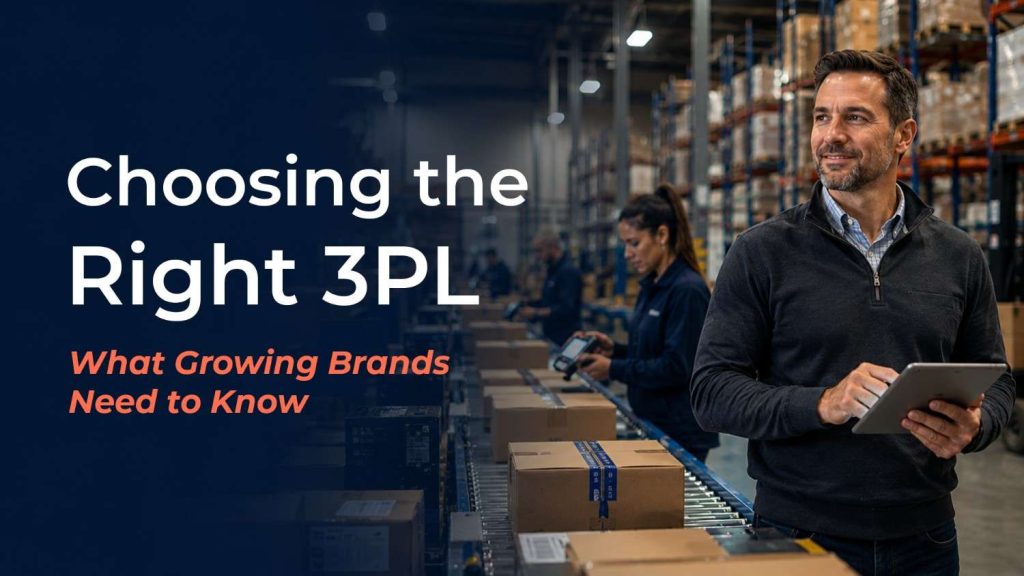
Every fast-growing ecommerce brand eventually hits the same wall: the garage, the spare bedroom, or the single rented unit can’t keep up with order volume anymore. That’s the moment founders start searching for warehousing and fulfillment companies, and quickly discover the category is enormous. Some providers are massive freight conglomerates built for Fortune 500 manufacturing accounts. Others are two-person operations running out of a single warehouse. Neither extreme is usually the right fit for a brand that’s scaling fast but still needs hands-on attention.
This guide breaks down what actually separates good warehousing and fulfillment companies from mediocre ones, the specific criteria worth asking about before signing a contract, and how Fulfillment Plus approaches each one.
Why the Right 3PL Partner Matters More Than Ever
Outsourced logistics isn’t a niche decision anymore, it’s become the default operating model for ecommerce brands of nearly every size. The global third-party logistics market is projected to grow from roughly $1.36 trillion in 2026 to $2.5 trillion within the next decade, and Grand View Research attributes much of that expansion to shippers favoring variable-cost logistics partnerships over building and staffing their own warehouses.
That shift makes sense. Building an in-house fulfillment operation means real estate, warehouse management software, hiring and training pickers, negotiating carrier rates, and managing all of it through peak season swings. Partnering with an established 3PL turns most of that fixed cost into a flexible, usage-based expense, freeing up capital for product development and marketing instead.
But outsourcing only pays off if the partner is actually good. A sloppy fulfillment operation creates late shipments, inventory discrepancies, and damaged customer trust faster than almost anything else in the business. Choosing among warehousing and fulfillment companies is one of the highest-leverage decisions a growing brand makes.
What the Best Warehousing and Fulfillment Companies Do Differently
The strongest 3PLs have quietly adopted a lot of the same technology that powers giants like Amazon: real-time inventory scanning, automated order routing, barcode-verified picking, and data dashboards that give brand owners visibility into their own stock without a phone call. We covered exactly how that kind of AI-driven fulfillment center works, step by step, in our breakdown of Amazon-level fulfillment technology, so we won’t repeat it all here.
What matters for this guide is the takeaway: this technology is no longer reserved for billion-dollar retailers. Mid-size and growing brands can access the same speed and accuracy through the right partner, without having to build any of it themselves.
7 Things to Look for When Evaluating Warehousing and Fulfillment Companies
1. Real-Time Inventory Visibility
Ask how (and how often) inventory counts update. A provider that reconciles stock once a day or once a week isn’t equipped for modern order volume. Look for live inventory management with low-stock alerts and aging reports, not a static spreadsheet emailed on Fridays.
2. Marketplace and Sales Channel Integrations
Your fulfillment partner should plug directly into wherever you sell, Amazon FBA/FBM, Shopify, Walmart, WooCommerce, BigCommerce, TikTok Shop, and beyond, so every order lands in one workflow instead of five disconnected ones. Review the provider’s ecommerce 3PL integrations before signing anything.
3. Kitting, Subscription, and Custom Packaging Capabilities
If your brand ships subscription boxes, influencer kits, or retail-compliant bundles, confirm the warehouse can actually assemble them in-house. Assembly and kitting services that live under the same roof as storage and shipping save time and reduce handoff errors.
4. Industry-Specific Compliance
Regulated categories need more than a generic warehouse. Brands selling dietary supplements, for example, should confirm the 3PL understands 21 CFR Part 111, the FDA’s current good manufacturing practice rule for supplement storage, handling, and documentation. Fulfillment Plus supports CFR 111-aligned supplement fulfillment for exactly this reason.
5. Pick and Pack Accuracy
Order accuracy is the metric that quietly makes or breaks customer retention. Ask potential partners how they verify picks, barcode scanning at every step should be standard, and how they handle pick and pack fulfillment during high-volume periods like Q4.
6. Nationwide (or Strategic) Warehouse Locations
Shipping cost and delivery speed both come down to geography. A single warehouse on one coast means slow, expensive delivery to the other. Look for a network of strategically placed warehouses that can support 2-day shipping across most of the country.
7. Transparent, Scalable Pricing
Finally, get real numbers. Vague “call for a quote” answers with no structure usually mean pricing that changes based on how much leverage you have. Review the provider’s pricing page and ask directly how storage, pick fees, and shipping are broken out.
Case Study: How Fulfillment Plus Checks Every Box
Fulfillment Plus has spent over four decades building exactly the kind of operation described above, technology-driven but still personal. A few specifics:
- Omega, the proprietary platform, scans every unit the moment it hits the dock, giving brands real-time inventory management and warehousing visibility from anywhere.
- One dashboard for every channel. Orders from Amazon, Shopify, Walmart, WooCommerce, BigCommerce, and TikTok Shop flow into a single system, picked, barcode-verified, and quality-checked before they leave the building.
- B2B and D2C in the same warehouse. Brands running wholesale accounts alongside direct-to-consumer orders can manage both through B2B wholesale distribution services without juggling two separate providers.
- A growing nationwide footprint, headquartered in New York with an expanding network of fulfillment centers, including a newly opened Long Island location, supporting same-day processing and 2-day shipping across the U.S.
- A dedicated account team, not a rotating call center, that actually knows a brand’s SKUs, seasonality, and customers.
Industries That Benefit Most From a Specialized 3PL
Some categories have requirements generic warehousing and fulfillment companies simply aren’t built to handle:
- Supplements and nutraceuticals, where CFR 111-aligned supplement fulfillment protects both compliance and brand reputation.
- Toys and games, where safety, care, and timeliness matter for toys and games fulfillment shipped to families.
- Food and beverage brands, where expiration tracking and labeling accuracy are non-negotiable, covered under food and beverage fulfillment.
- Beauty and clothing brands, where custom presentation and unboxing experience directly affect repeat purchases, supported by beauty product fulfillment.
Frequently Asked Questions
What’s the difference between a 3PL and a fulfillment center? A 3PL (third-party logistics provider) is the broader category, it can include warehousing, transportation, freight, and fulfillment. A fulfillment center is more specific: the physical warehouse where inventory is stored, picked, packed, and shipped for ecommerce orders. Most warehousing and fulfillment companies, including Fulfillment Plus, operate as both.
How much do warehousing and fulfillment companies typically charge? Pricing usually breaks into a few buckets: receiving fees, storage (charged by pallet, bin, or unit), pick and pack fees per order, and shipping costs. Rates vary widely by provider and order volume, which is why a transparent pricing page and a direct conversation matter more than a generic industry average.
How long does it take to onboard with a new fulfillment partner? Timelines vary by inventory volume and complexity, but most brands can expect a phased onboarding: inventory transfer and receiving, system integration with sales channels, and a testing period before going fully live. A dedicated onboarding contact makes this process significantly smoother.
Can a 3PL handle both Amazon FBA prep and direct-to-consumer orders? Yes, this is one of the biggest reasons brands choose a specialized ecommerce 3PL. A single provider with marketplace integrations can prep and ship FBA inbound shipments while simultaneously fulfilling DTC orders from the same inventory pool.
Is it worth switching 3PLs if my current provider is “good enough”? If inventory visibility, order accuracy, or shipping speed are consistently causing customer complaints, “good enough” is usually costing more in lost repeat business than a switch would cost in transition time. It’s worth requesting a free quote for comparison even while evaluating.
Ready to see how Fulfillment Plus stacks up against your current fulfillment setup? Get a free quote and talk to the team directly.
One thought on “How to Choose the Right Warehousing and Fulfillment Companies for Your Growing Brand”