Pick and Pack Fulfillment: Choosing the Right Picking Strategy | TeamFPI
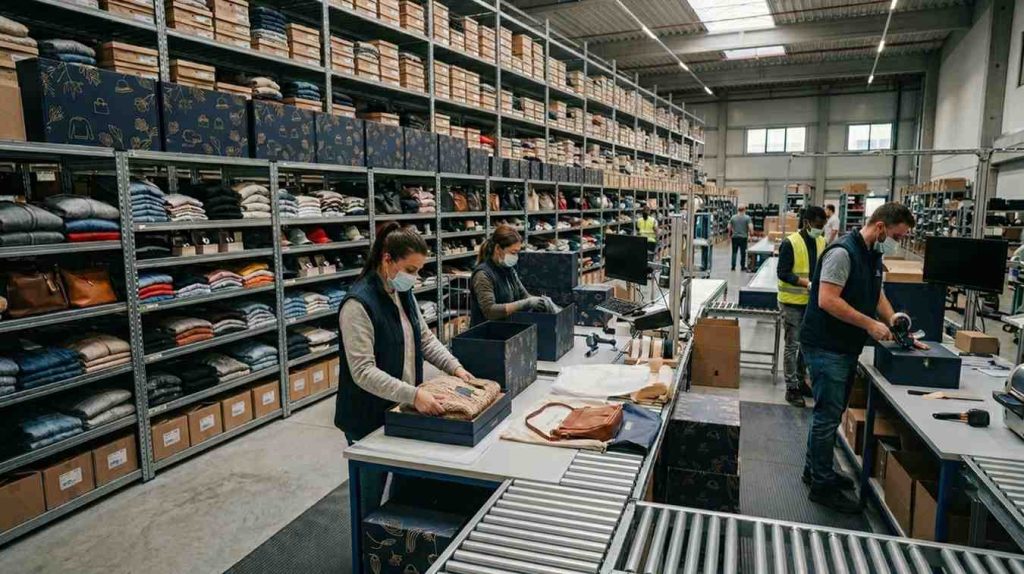
Every order that leaves your warehouse starts with one decision most customers never see: how it gets picked. For businesses relying on pick and pack fulfillment, this single step shapes everything downstream, order accuracy, shipping speed, labor costs, and ultimately, customer satisfaction.
Yet many growing brands treat picking as an afterthought. They stick with whatever method they started with, even as order volume, SKU count, and customer expectations change around them. The result is a fulfillment operation that’s working harder than it needs to.
In this guide, we’ll break down the three core picking strategies used in modern pick and pack fulfillment, when each one makes sense, and how a strong 3PL partner blends them to keep your orders moving efficiently no matter how complex your catalog gets.
What Is Pick and Pack Fulfillment?
Pick and pack fulfillment is the process of retrieving (picking) individual items from warehouse storage and preparing (packing) them into shipment-ready packages based on customer orders. It’s the operational core of ecommerce and B2B order fulfillment, sitting between inventory storage and final shipping.
Done well, pick and pack fulfillment means orders go out accurately and quickly. Done poorly, it means mispicks, delayed shipments, and rising labor costs that eat into margins. The picking strategy a warehouse uses is one of the biggest levers for getting this right.
The Three Core Picking Strategies
1. Single Order Picking
Single order picking is exactly what it sounds like: one picker fulfills one order at a time, start to finish, before moving to the next.
Best for:
- Businesses with lower order volume
- High-value or highly customized orders where accuracy is critical
- Operations just getting started with fulfillment
Advantages:
- Highest accuracy, since there’s no risk of items from different orders getting mixed up
- Simple to train new staff on
- Easy to trace errors back to a single order
Trade-off: It’s the slowest method per order at scale, since pickers are making repeated trips across the warehouse floor rather than consolidating movement.
2. Batch Picking
Batch picking groups multiple orders together and has a single picker collect items for all of them in one pass through the warehouse, then sort them into individual orders afterward.
Best for:
- Higher order volumes with overlapping SKUs
- Ecommerce businesses during peak seasons
- Warehouses looking to reduce picker travel time
Advantages:
- Significantly faster fulfillment, since pickers cover more orders per trip
- Reduces labor costs per order at volume
- Scales well as order counts grow
Trade-off: Requires more upfront organization (sorting stations, order grouping logic, and often technology support) to avoid mixing items between orders.
3. Pick List Picking
Pick list picking (sometimes called zone picking when combined with warehouse layout) uses organized, itemized lists that guide pickers through a structured, repeatable route. It’s often layered on top of single order or batch picking to add consistency at scale.
Best for:
- Warehouses with large SKU counts across multiple zones
- Operations that need standardized, auditable processes
- 3PLs managing multiple clients with different catalogs
Advantages:
- Creates a scalable, organized workflow that’s easy to audit and optimize
- Reduces reliance on picker memory or guesswork
- Pairs well with warehouse management systems (WMS) for real-time accuracy tracking
Trade-off: Requires ongoing list management and warehouse organization to keep routes efficient as inventory shifts.
Why the Best Warehouses Don’t Rely on Just One Method
The most efficient fulfillment operations don’t force every order through the same process. Instead, they match the picking method to the workflow:
- A single high-value custom order might go through single order picking for maximum accuracy.
- A wave of overlapping ecommerce orders during a flash sale might move through batch picking to hit shipping cutoffs.
- A multi-client 3PL warehouse might rely on structured pick list picking to keep zones organized and auditable across dozens of SKUs.
This flexibility is exactly what separates a fulfillment partner that’s optimizing for your business from one that’s just processing orders.
How TeamFPI Optimizes Every Step of Pick and Pack Fulfillment
Choosing the right picking strategy is only part of the equation. It has to be paired with the right technology, warehouse layout, and experienced staff to actually deliver results. That’s where a fulfillment partner makes the difference.
TeamFPI blends single order, batch, and pick list picking based on order type, volume, and client needs, so every shipment moves through the most efficient path available, not a one-size-fits-all process. Learn more about how this works on our pick and pack fulfillment page.
Watch the full breakdown of these picking strategies in our video walkthrough, where we show each method in action inside a working warehouse environment.
Key Takeaways
- Pick and pack fulfillment is the operational backbone of accurate, fast order shipping.
- Single order picking maximizes accuracy for lower-volume or high-value orders.
- Batch picking speeds up fulfillment for higher-volume, overlapping orders.
- Pick list picking brings organization and scalability, especially across large SKU counts or multi-client warehouses.
- The most efficient warehouses combine all three based on workflow, rather than committing to one method across the board.
Ready to optimize your fulfillment process? Talk to TeamFPI about a picking strategy built around your order volume and accuracy goals.
Frequently Asked Questions
What is the difference between pick and pack fulfillment and standard order fulfillment? Pick and pack fulfillment refers specifically to the picking and packing steps within the broader fulfillment process. Standard order fulfillment includes additional steps like receiving inventory, storage, shipping, and returns handling, with pick and pack sitting at the core of getting an order physically ready to ship.
Which picking strategy is best for a small ecommerce business? Single order picking usually works best for smaller order volumes, since accuracy matters more than speed at that scale. As order volume grows, batch picking becomes more cost-effective.
Can a warehouse use more than one picking strategy at the same time? Yes, and most efficient warehouses do. A 3PL might use single order picking for high-value custom orders while running batch picking for standard ecommerce orders during high-volume periods, all within the same facility.
How does picking strategy affect shipping speed? Picking is typically the most time-consuming part of order fulfillment before shipping. Choosing a strategy that matches order volume and complexity, batch or pick list picking at scale, for example, directly reduces the time between order placement and shipment.
Does picking strategy impact order accuracy? Yes. Single order picking generally offers the highest accuracy since there’s no risk of cross-order mixing. Batch and pick list picking can match that accuracy level too, but only when paired with proper sorting systems and warehouse management technology.
How do I know which picking strategy my business needs? It depends on order volume, SKU overlap between orders, and how much accuracy risk you can tolerate. A fulfillment partner like TeamFPI can assess your order patterns and recommend (or blend) the right strategy rather than forcing a one-size-fits-all approach.